Paintless dent repair, commonly called PDR, is a method of reshaping certain dents without sanding, body filler, primer, or repainting the repaired area. It can be a good option when the metal is accessible, the dent is suitable for the process, and the original paint finish remains intact.
Lone Star Paint & Body provides paintless dent repair in Lewisville for qualifying door dings, minor dents, and hail damage. If PDR is not the right repair method, we can explain whether traditional auto body repair or paint refinishing is more appropriate.
PDR is not determined by dent size alone. The location, depth, shape, metal condition, access behind the panel, and condition of the paint all matter.
Small dings from parking lots and everyday contact may be good PDR candidates when the paint is intact and the panel can be accessed.
Some shallow or moderate dents can be reshaped without traditional body filler and repainting, depending on their location and severity.
Paintless dent repair is commonly used for qualifying hail dents, especially when there are many small dents across otherwise undamaged painted panels.
Some dents along body lines may be repairable with PDR, but the shape and metal tension can make these repairs more complex.
Small impact dents may qualify when the metal has not been stretched too severely and the surrounding finish remains in usable condition.
When many small dents are present, such as after a hailstorm, PDR may allow several damaged areas to be addressed without refinishing each panel.
Paintless dent repair works best when the original finish is still intact and the dent can be reshaped without repairing the paint surface. When the damage includes cracked paint, deep creases, torn metal, severe stretching, sharp impact damage, or inaccessible areas, a different repair method may be needed.
We do not assume every dent should be handled with PDR. Lone Star can evaluate the panel and explain whether paintless dent repair, conventional auto body repair, or a combination of repair methods makes the most sense.
The exact technique depends on the dent and panel, but PDR typically follows a careful evaluation and reshaping process.
The panel is reviewed to determine the dent's shape, depth, location, paint condition, and whether PDR appears suitable.
The technician evaluates how the back side of the dent can be reached or whether an alternate PDR technique is needed.
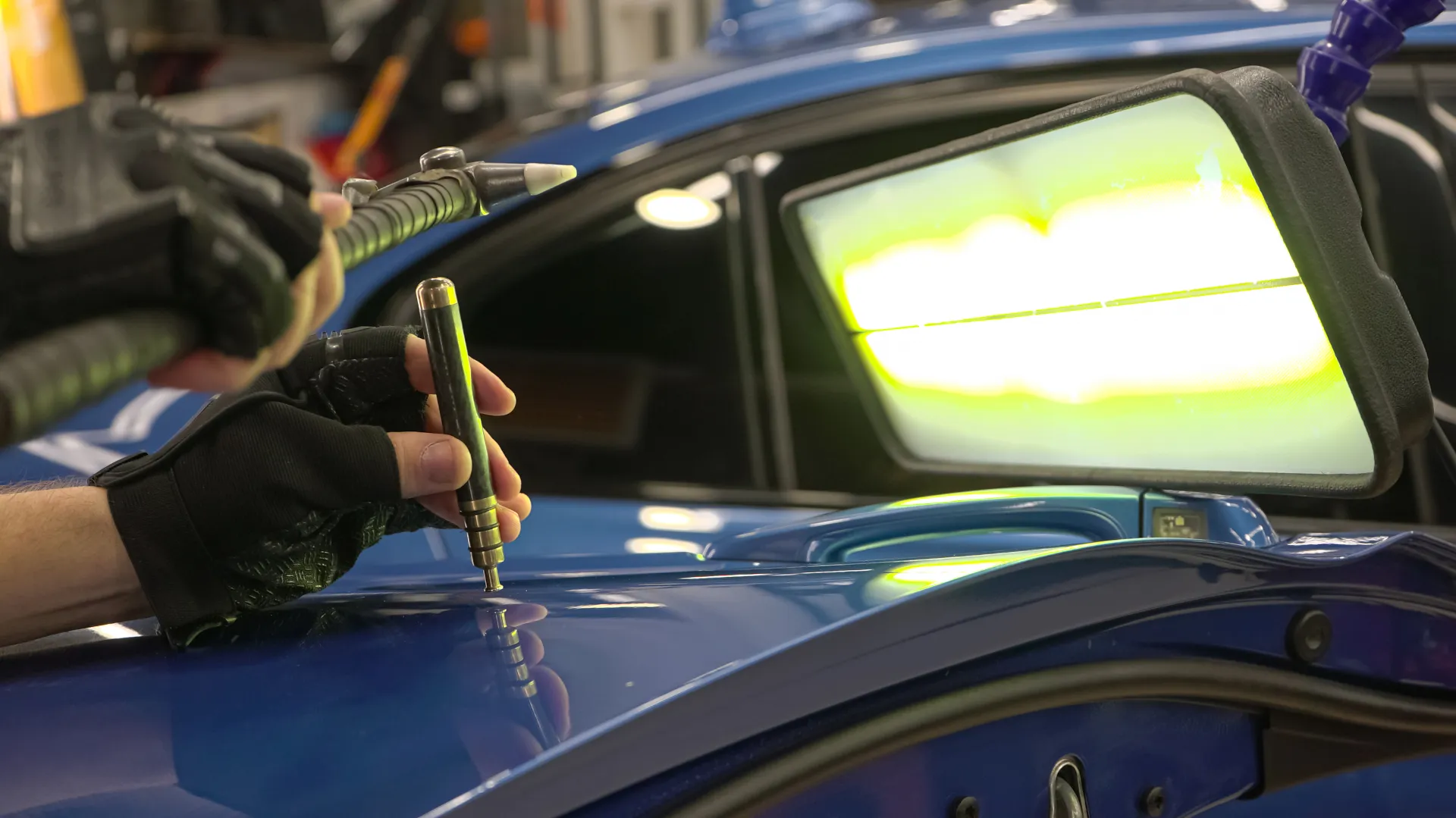
The damaged area is carefully reshaped in controlled steps rather than filled and refinished like a conventional body repair.
Specialized lighting and reflection patterns can help the technician see high and low areas while refining the panel surface.
The repaired area is reviewed to determine whether the PDR work is complete or whether any additional repair is recommended.
North Texas hailstorms can leave dozens of small dents across a hood, roof, trunk, and side panels. PDR is often a strong option when the dents are suitable and the factory paint remains intact.
However, not every hail-damaged vehicle can be handled entirely with PDR. Cracked paint, severe dents, damaged trim, broken glass, or panels that require conventional body repair can change the repair plan.
For hail-specific information, visit our Hail Damage Repair in Lewisville page.
No, when PDR is appropriate the goal is to reshape the panel while preserving the existing paint finish. If the paint is cracked, chipped, or otherwise damaged, traditional body repair and refinishing may be needed.
Yes, many hail dents can be good candidates for PDR when the dents are suitable and the original paint remains intact. Severe dents or damaged paint may require other repair methods.
No. Dent depth, shape, location, panel material, metal stretching, paint condition, and access behind the panel all affect whether PDR is appropriate.
PDR can involve fewer refinishing steps when it is appropriate, but repair time still depends on the number, size, location, and complexity of the dents.
PDR may be included in an insurance claim for a covered loss such as hail or accident damage, but coverage depends on the policy and claim. Lone Star can provide repair-related documentation when insurance is involved.
Lone Star Paint & Body is located at 719 N Cowan Ave #100 in Lewisville, TX 75057.
Send photos online, request an appointment, or call Lone Star Paint & Body to find out whether PDR may be appropriate for your vehicle damage.
719 N Cowan Ave #100
Lewisville, TX 75057
Phone: (469) 953-8415
Email: [email protected]