
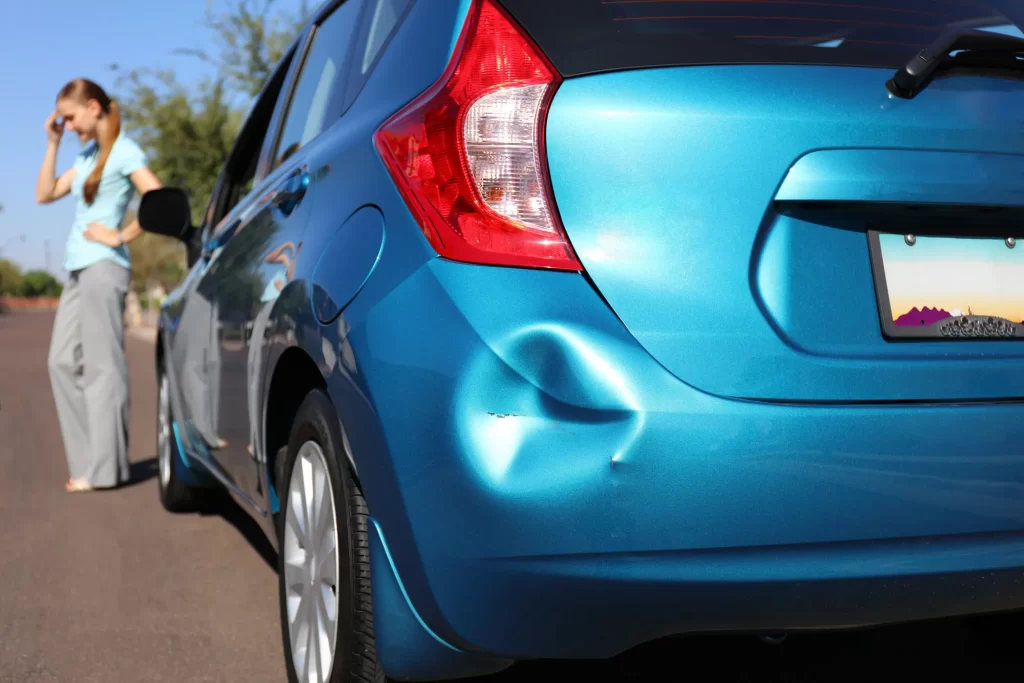
A low-speed fender bender can look simple at first: a dented bumper, paint transfer, a scuff, or a panel that suddenly does not line up quite right. But before deciding whether the repair is minor, it helps to document the accident, understand your insurance options, and have the damage evaluated.
If you are dealing with a minor accident in Lewisville, this guide explains what to do next, what to consider before filing a claim, and when a professional collision repair evaluation may be useful.
Step 1: Make Sure Everyone Is Safe
Safety comes first, even when the accident appears minor. Move to a safe location if possible, turn on your hazard lights, and check everyone involved for injuries. If someone is hurt, traffic conditions are dangerous, or you are unsure whether emergency assistance is needed, call 911.
Once the immediate safety concerns are handled, take a few minutes to document what happened before the vehicles leave the scene.
Document the Scene
- Photograph both vehicles from several angles.
- Take close-ups of visible dents, scratches, cracks, and paint transfer.
- Photograph license plates, nearby signs, lane markings, and the surrounding area.
- Exchange contact and insurance information with the other driver.
- If there are witnesses, ask whether they are willing to provide contact information.
Good documentation can help later when discussing the damage with a repair shop or insurance company.
Step 2: Understand the Difference Between Calling Your Insurer and Filing a Claim
One important distinction is that asking your insurance company questions is not necessarily the same thing as filing a claim. The Texas Department of Insurance says drivers can contact their insurer to ask about the claims process, their deductible, or whether a loss may be covered. Your specific policy may also contain notice or reporting requirements, so review your policy rather than assuming you should delay contact.
If you are unsure how the repair process works, Lone Star Paint & Body also provides insurance claim assistance for collision repairs, including help understanding estimates, supplements, and repair documentation.
For a broader overview of Texas repair-shop choice, estimates, towing, and the repair process, see our Lewisville Collision Repair & Insurance Guide.
Step 3: Find Out What the Damage Actually Involves
A bumper scuff or dent may be cosmetic, but low-speed impacts can also affect brackets, mounting points, sensors, panel alignment, or components behind the bumper cover. That is why it is useful to understand the likely repair before assuming the damage is small.
For more information on what may be concealed behind visible damage, read our article on hidden damage after an accident.
If the problem is limited to the bumper, you can also learn more about bumper repair in Lewisville, including repair and replacement options for dents, cracks, scrapes, and impact damage.
Step 4: Compare the Repair Cost With Your Deductible and Coverage
For minor damage, the repair estimate and your deductible can help you understand the financial side of the decision. If the repair cost is close to or below your deductible, there may be little or no payment available under your collision coverage. If the repair is more extensive than it first appeared, a claim may become more relevant.
The Texas Department of Insurance recommends checking your deductible and getting repair estimates when deciding whether to file a claim. Coverage, fault, policy terms, and the circumstances of the accident can all affect the outcome, so this decision should be based on your own policy and situation rather than a general rule.
Step 5: Know That a Claim Can Affect Premiums, But Not Every Claim Has the Same Result
Insurance companies consider many factors when setting premiums. According to the Texas Department of Insurance, auto premiums can increase after some claims or accidents, but the outcome depends on the type of claim, claims history, driving history, and other rating factors.
That does not mean a premium will automatically increase after every minor accident. It does mean that repair cost, deductible, coverage, and the seriousness of the damage are all worth understanding before deciding how to proceed.
Step 6: Choose the Repair Shop You Are Comfortable With
If an insurance claim is involved, the insurer may provide a list of repair facilities. In Texas, however, drivers can choose which body shop repairs their vehicle. The insurance company may still have requirements related to estimates, reasonable repair costs, and the claim process.
When comparing shops, look at communication, repair capabilities, training, equipment, warranty information, and customer reviews. For accident-related damage, the shop should be able to explain the repair plan and how any additional damage discovered during disassembly will be handled.
Lone Star Paint & Body provides collision repair in Lewisville, TX for accident-damaged cars, trucks, and SUVs, including body, bumper, structural, paint, and insurance-related repair needs.
Common Fender-Bender Damage
Minor accidents can produce several different kinds of damage. Some repairs are largely cosmetic, while others require a closer inspection to determine whether anything behind the visible panel was affected.
- Bumper dents, cracks, scrapes, or paint transfer
- Damaged fenders or quarter panels
- Misaligned panels or uneven gaps
- Scratches, chipped paint, or exposed metal
- Broken brackets, clips, or mounting points
- Sensor or alignment concerns after an impact
Even when a vehicle remains drivable, documenting and evaluating the damage can help you avoid making a repair decision based only on what is visible from the outside.
Need Help After a Fender Bender in Lewisville?
If your vehicle has minor accident damage and you are trying to understand the next step, Lone Star Paint & Body can review the damage and explain the repair options. You can start with an online estimate request or arrange an in-person inspection when a closer look is needed.
This article is intended for general informational purposes only and is not legal or insurance advice. Policy terms, reporting requirements, coverage, deductibles, and claim outcomes vary. Review your policy and contact your insurer or another qualified professional if you have questions about your specific situation.
Pingback: Hidden Damage After an Accident: What You Can’t See Can Cost You Later - Lone Star Paint & Body